


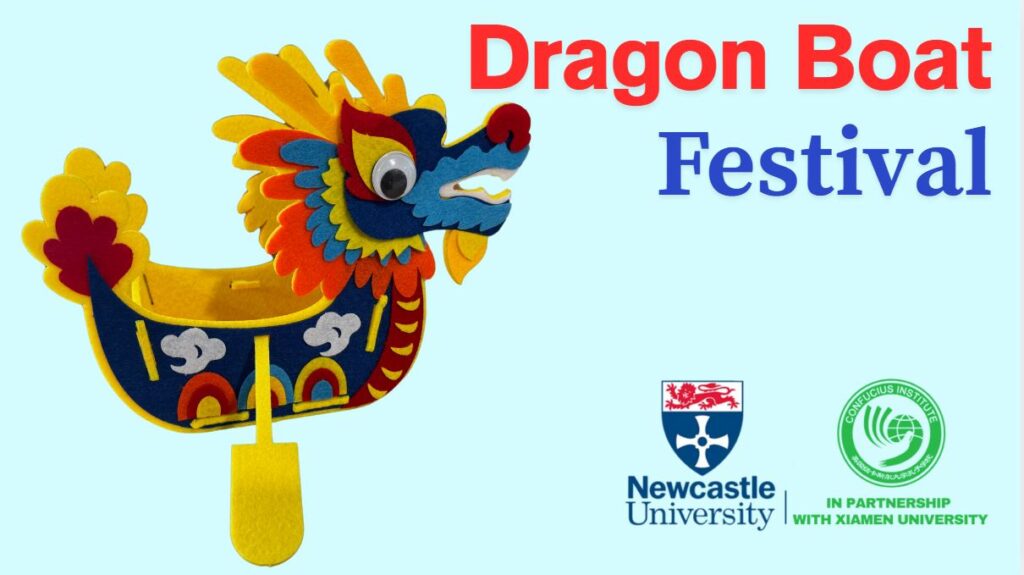
We were honoured to be part of the Dragon Boat Festival celebrations this week at Newcastle University, joining staff and students from Newcastle University’s School of Modern Languages and the Confucius Institute, as well as members of the Chinese community.

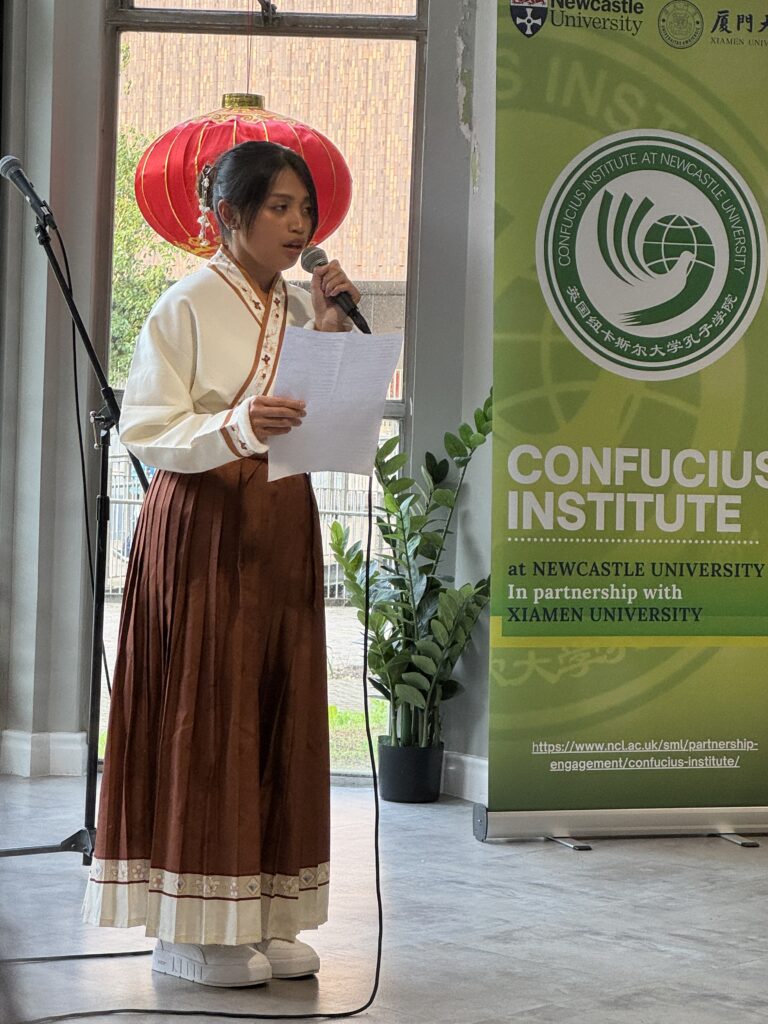
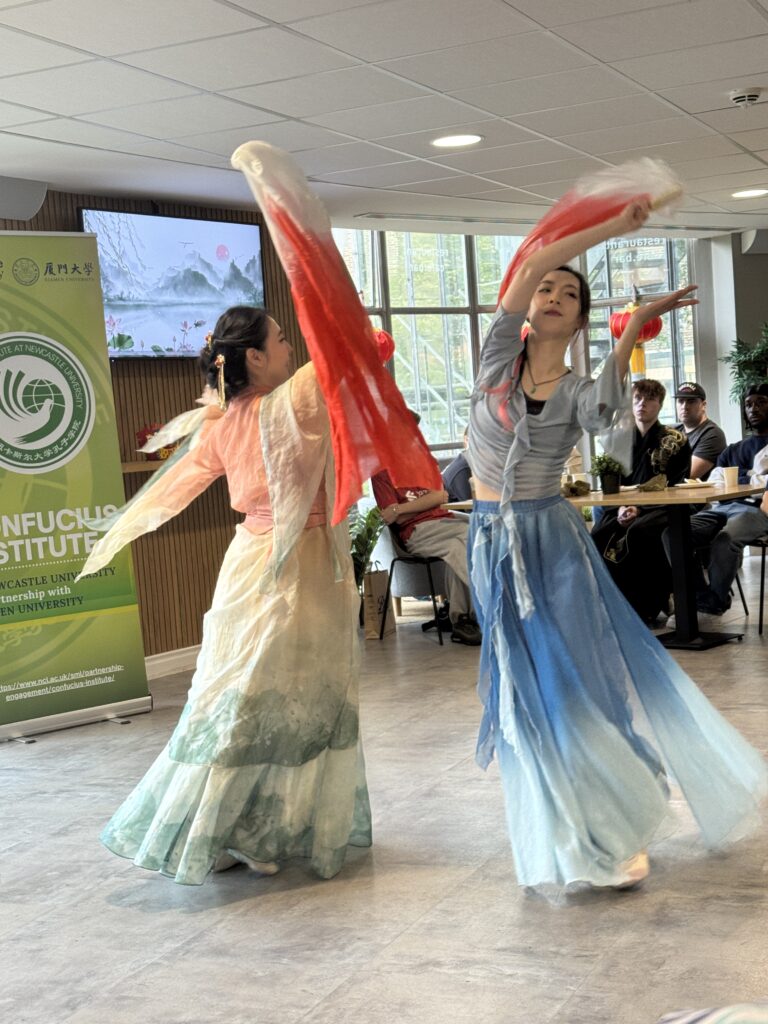

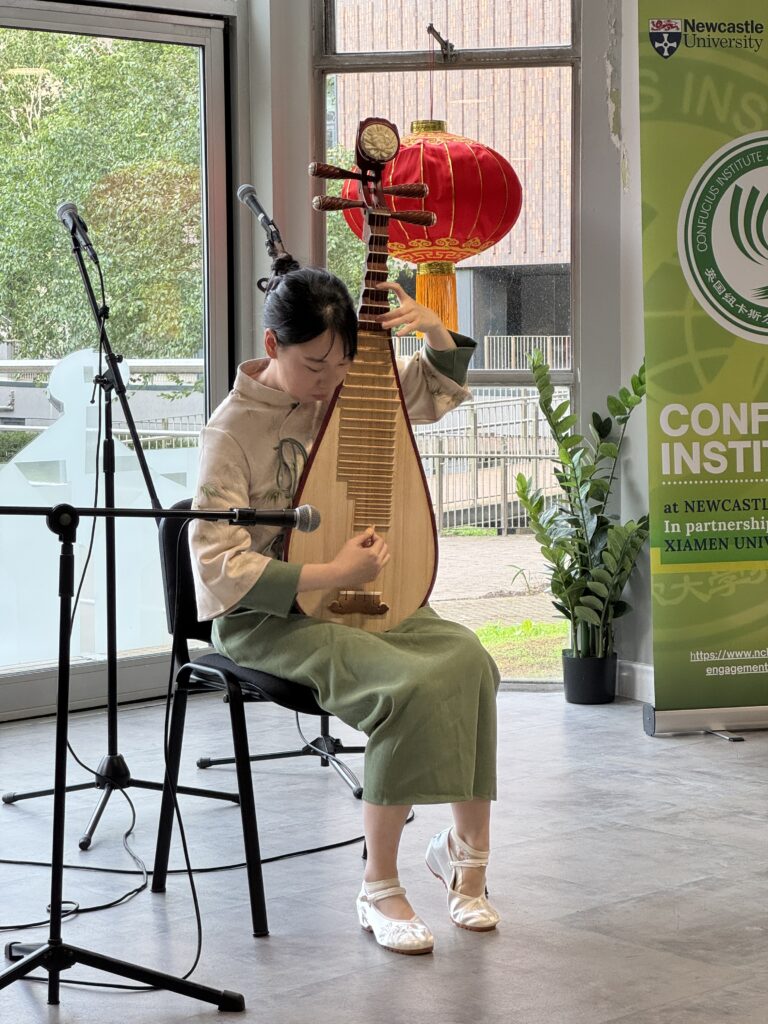
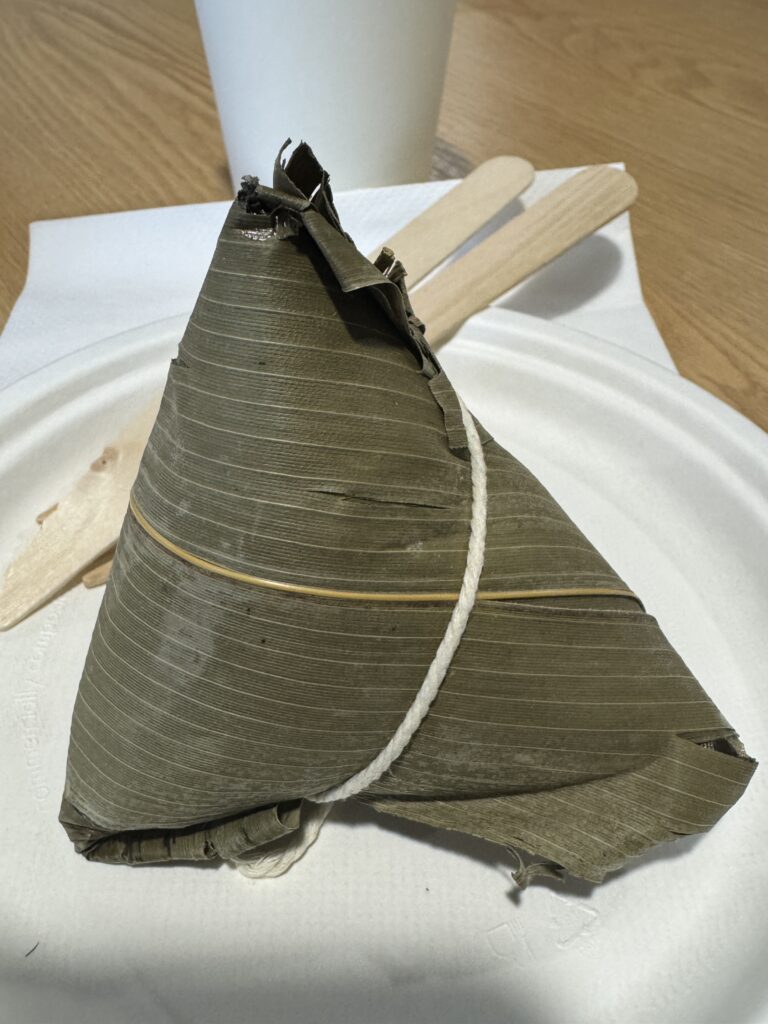
Performances of traditional Chinese music, songs, poetry and dancing were a highlight of the celebrations, with guests also enjoying zòng zi, a sweet sticky rice traditional dish. Representatives from the School of Modern Languages and Confucius Institute at Newcastle University provided information and insight into the Festival, it’s history and traditions.


The history and traditions of the Dragon Boat Festival
The Dragon Boat Festival 端午节 (duān wǔ jié) is an important Chinese festival dating back more than 2,000 years. It is also called the Double Fifth Festival, because it is celebrated on the fifth day of the fifth lunar month of the Chinese calendar, which falls in May or June. It is associated with rituals to ward off evil spirits and disease, which are thought to threaten during the fifth month.
The festival commemorates the death of the poet and minister Qu Yuan (c. 340–278 BCE) of the ancient state of Chu during the Warring States period of the Zhou dynasty. He served in high offices, but when the king decided to ally with the increasingly powerful state of Qin, was banished for opposing the alliance and accused of treason. During his exile, Qu Yuan wrote an important body of poetry.
Eventually, Qin captured Ying, the Chu capital. In despair, Qu Yuan committed suicide by drowning himself in the Miluo River. It is said that the local people, who admired him, raced out in their boats to save him, or at least retrieve his body. This is said to have been the origin of dragon boat race 龙舟赛 (lóng zhōu sài). When his body could not be found, they dropped balls of sticky rice into the river so that the fish would eat them instead of Qu Yuan’s body. This is said to be the origin of 粽子 (zòng zi), which is traditionally eaten during the Festival.
To prevent diseases and repel insects, homes are often decorated with auspicious plants like mugwort and calamus. These plants are believed to have protective properties, aligning with the festival’s themes of health and safety.
Consuming realgar wine is another tradition associated with the Dragon Boat Festival. Historically, this practice was believed to ward off evil spirits and disease. The wine, consisting of fermented cereals and powdered realgar, is considered both a medicinal and protective drink.
On the Dragon Boat Festival, children normally wear scented sachets threaded with five-color silk string to ward off evil. A scented sachet is an ornament worn on the front of the dress.