


Have you ever wondered about Express Yourself: North East Festival of Languages, what opportunities it offers to children and young people in the North East and beyond and why this is important for the region and the future? Festival organisers Declan Baharini and Sarah Edgar explain all in an article published in the Journal in January and a short film produced by LocalTV.
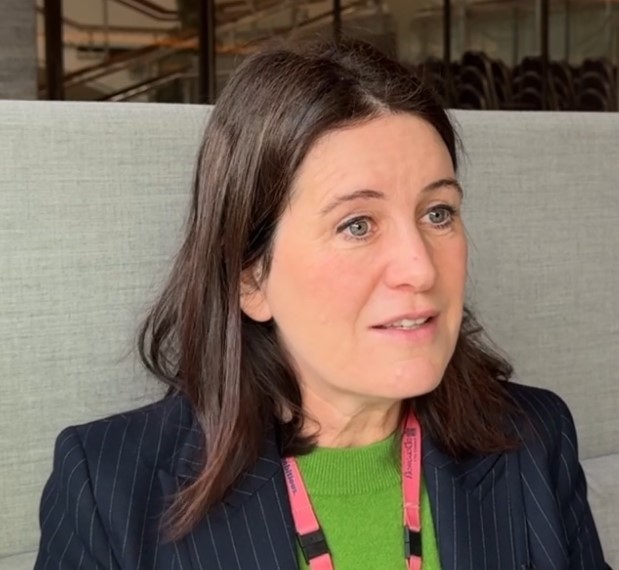
Sarah Edgar, Education Consultant, Newcastle City Council (School Effectiveness)
Click here to watch the short film by LocalTV
Sarah was interviewed by Local TV and explained what the Festival is, how it encourages teachers and schools to celebrate languages and cultures, how it builds skills and confidence and how it can inspire children and young people to embrace their home languages and languages they learn to open doors to future opportunities.
She also explains how it is important for the region, as an outward facing, globally connected place, to encourage children and young people to build these skills to be part of the world and access all of the opportunities available to them.
Why the North East is leading the way in helping young people embrace languages and cultures
Published in the Journal 8th January 2026
Declan Baharini, CEO International Newcastle, and Co-ordinator, Express Yourself: North East Festival of Languages
In January 2026, schools across the North East, and the UK, begin three months of celebration, creativity and connection as Express Yourself: North East Festival of Languages gets underway. Our region leads the way as this is the UK’s largest festival of languages, delivered free to schools, community schools and groups in the North East, and across the UK. Last year 428 schools and 93,798 children and young people took part, and many more are expected to take part this year as we present the biggest and best programme to date.
At its heart, the Festival exists to make languages feel alive, relevant and accessible. It is designed for children and young people aged 3 to 18, and it works alongside teachers rather than adding to their workload by enriching the curriculum.
Through free live and online events, competitions, creative projects and classroom-ready activities, the Festival helps pupils build confidence, communication skills, curiosity and intercultural understanding – skills that matter just as much as exam results in an increasingly interconnected world.
Pupils in the North East get the additional opportunity to take part in live in-person events which bring languages to life in creative ways, from learning about world languages and cultures, exploring how languages help careers opportunities and having on campus university experiences with staff and students, all of which widen horizons and broaden their experience.
For pupils, this is an opportunity to explore another language through music, sport, art, storytelling and different cultures. For our region, it is a statement of confidence about who we are and how we prepare our young people for the future.
The North East Festival of Languages is now in its sixth year, and there is a real appetite to give children and young people opportunities to look beyond their immediate surroundings and see themselves as part of a wider world. Languages and cultural awareness provide one of the most powerful ways to do that.
What makes the North East Festival of Languages distinctive is both its regional roots and international partnerships. The programme is delivered through a partnership of more than 50 local, regional, national and international organisations, coordinated by International Newcastle. Universities, cultural organisations, community groups and international partners all play a role, sharing their expertise and experiences in classrooms, community venues, on campus and in civic buildings across the region.
A large number of online events, activities and especially prepared teaching resources for the classroom means that pupils can take part in their own schools over a 3-month period. Part of the programme is also offered to schools across the UK and schools around the world can take part with their North East partner schools, as well as in a worldwide friendship project, Together we Fly! This shows the generosity of the region – sharing that Festival experience with schools nationally, and internationally, but also builds a profile for the importance of investing in languages and cultural experiences for children and young people. This collaborative approach reflects the North East at its best: outward-looking, generous and proud of its diversity.

Crucially, the Festival’s growth and reach have been made possible by strong public support. It is part-funded by the North East Combined Authority via a grant to Newcastle City Council. Funding from North East Mayor Kim McGuinness has enabled the Festival to expand and reach even more schools, community schools and groups across the region.
In her support for the Festival Mayor Kim McGuinness has spoken about raising aspirations and preparing young people for a global society, with languages being central to that ambition. They help young people understand that the North East has always been connected to the world – through trade, industry, migration and culture -and that those connections continue to shape our future.
We want to inspire pupils to continue studying languages at school and beyond. But we also recognise that languages are about people. They are about listening, empathy and understanding difference. Whether a pupil is designing a crêpe in French, exploring Japanese culture through art, or joining a live university-led lesson, they are developing confidence in communication and a sense of belonging in a wider world.
That matters for our region. The North East is rightly proud of its strong sense of identity, but we are also a region that benefits when our young people can move comfortably between local pride and global awareness. Our schools are increasingly diverse, with children and young people from a wide range of backgrounds, cultures and traditions and who speak many different languages. Employers increasingly value cultural understanding and communication skills. Communities are strengthened when people feel curious rather than fearful about difference. Languages help make that possible.
International Newcastle’s role in co-ordinating the Festival and its relationship with Newcastle City Council is also vital. As organisations focused on making Newcastle and the wider region a welcoming, internationally connected place, they ensure that the Festival is rooted in real-world global relationships and develop the wider partnership with organisations locally, regionally, nationally and internationally that invest in the region’s children and young people. That connection between education, culture and place is one of the Festival’s greatest strengths.
As Festival Coordinator, I see the impact most clearly in the feedback from teachers and pupils. Teachers tell us that the Festival helps open minds, sparks enthusiasm and gives children new ways to see themselves and others. Pupils tell us they feel proud, excited and more confident trying something new. Those are outcomes that stay with young people long after an individual event has finished.
The North East Festival of Languages is free and open to all schools and community schools across the region, and it remains flexible by design. Schools can take part in a way that works for them and are encouraged to take part in multiple activities across the three months. And because languages are about connection, schools beyond the region – and even internationally – can join in through partnerships, competitions and shared projects.
As the UK prepares to rejoin European youth mobility programmes, such as Erasmus+, it is even more important that we help prepare them for the future. Experiencing languages and other cultures they have access to through the Festival opens doors to these opportunities.
The North East is choosing to look outward – and to bring its young people with it. With the continued support of the North East Combined Authority, Newcastle City Council, International Newcastle and our many partners, the Festival is helping to ensure that every child in our region has the chance to engage with languages, cultures and the wider world.
Teachers can explore the 2026 Festival programme, and there’s lots of time to get involved!
The Festival is part-funded by the North East Combined Authority
