


Article written and photography by Denise Kua Sze Min (Festival Intern – Digital Content Creator)
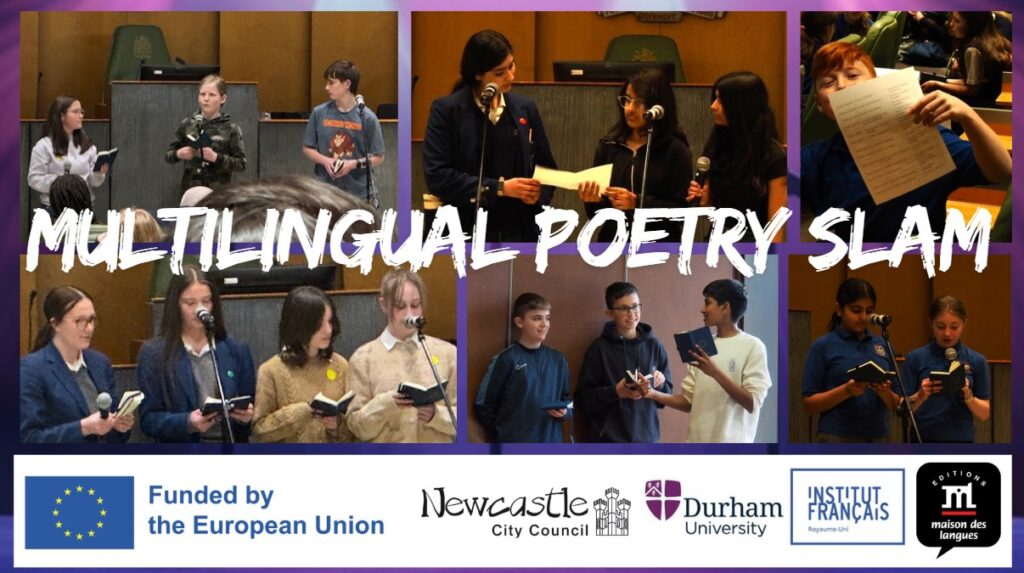
Young people from across the North East took to the stage at the Newcastle Civic Centre’s Council Chamber for a lively, high-energy Multilingual Poetry Slam as part of our 2026 Express Yourself: North East Festival of Languages. Over 100 pupils (aged 11-18) from across the region participated, from Great Park Academy and Sacred Heart Catholic High School in Newcastle, Chantry Middle School in Morpeth and Our Lady & St Bede Catholic Academy in Stockton-on Tees.
The event on Friday 27 March inspired the young people taking part to create and perform original poetry in multiple languages, including English, French, Spanish, Turkish, Arabic and other home languages spoken by the students. It enabled them to express themselves in an engaging and interactive environment while encouraging creativity, collaboration and confidence. It was funded by the European Union, whose support made it possible to provide students with a unique opportunity to explore language skills beyond the classroom setting.

Poets L-R: Michaël Vidon, Steve Larkin, Elida Silvey and Zohab Zee Khan
Led by acclaimed poet Michaël Vidon and an international team of professional spoken word artists, Steve Larkin, Elida Silvey and Zohab Zee Khan, pupils heard the international poets perform poems in different languages including a poem of sounds on a didgeridoo.
Designed to make language learning accessible, inclusive, and fun, the event encouraged young people to collaborate across schools, languages, backgrounds and age groups, build confidence speaking in public and express their ideas creatively.
The Multilingual Poetry Slam has connection at its core: children get to know peers from other schools and social backgrounds and together they combine their lived experiences into group poems.
Writing poetry in multiple languages is a great opportunity to play with words, meanings and sounds in a fun and engaging way. It brings great pride and opens new ways of thinking about the world around us. After the Slam, students learnt about themselves and did something they maybe thought they could not do – from performing on a stage to rhyming across languages!
Michaël Vidon, Lead poet, teacher and spoken word artist
Watch the short film about the event by playing the video opposite or by clicking here
Exploring creativity and sparking enthusiasm
The event began with an engaging musical introduction by Zohab Zee Khan, who performed using the didgeridoo, a traditional wooden wind instrument. He demonstrated the technique of circular breathing, which allows the musician to produce a continuous sound without interruption. This unique performance immediately captured the attention of the pupils and created an exciting start to the day. The performance also introduced students to a different cultural musical tradition, setting the tone for a multicultural and multilingual learning experience.
Following the opening performance, the pupils were divided into smaller workshop groups of approximately thirty students per group. Each group was led by one of the spoken word artists . The workshops began with an introduction to different types of poetry, including spoken word poetry, rhyme-based poetry, and free verse. The poets explained how poems can express emotions, tell stories, and communicate ideas through rhythm, imagery, and language choice. Students were also taught basic techniques for constructing poems, such as choosing themes, using descriptive language, and structuring lines for impact and expression.
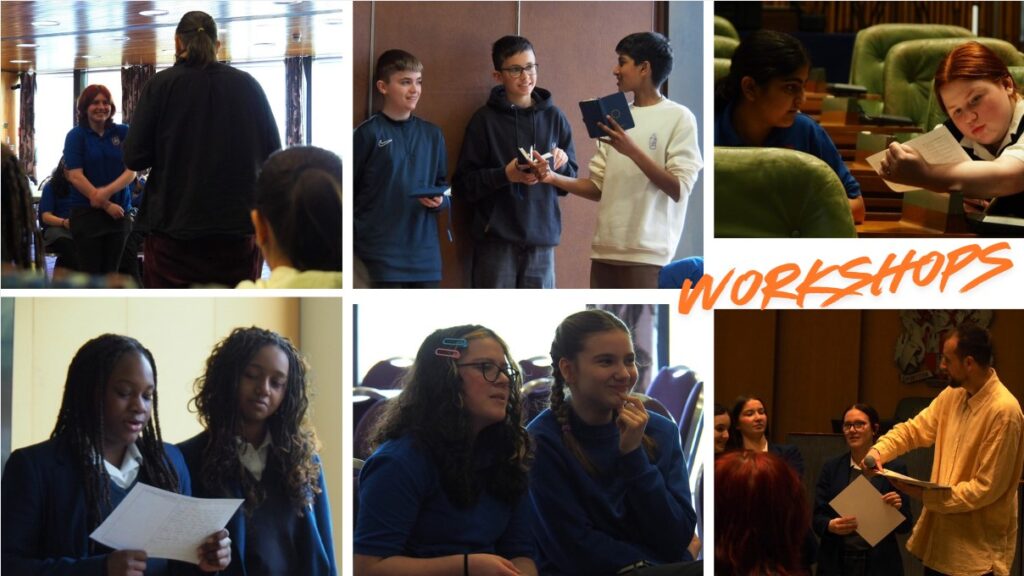
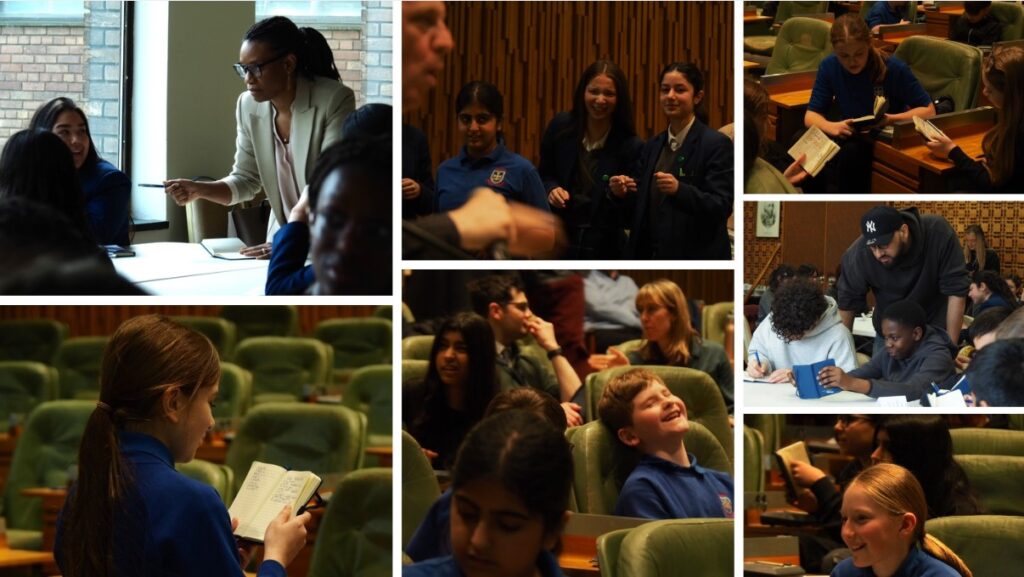
After the introduction, students were divided into smaller mixed-school groups to encourage collaboration and interaction between pupils from different schools. Each group worked together to create their own multilingual poem, combining different languages such as French, German, Chinese, and English. During this activity, the poets moved around the room, offering guidance, suggestions, and encouragement to help students develop their ideas and improve their poems. This collaborative activity not only allowed students to practise language skills but also helped them build teamwork and communication skills.
In addition to poem writing, the workshops included interactive language and creativity games. One popular activity was the word chain game, where students sat in a circle while two students stood in the middle. One student would say a word, and the other would respond with another word that connected to the first, gradually building a story or idea through a chain of words. This activity encouraged quick thinking, creativity, and confidence in speaking in front of others. It also helped students become more comfortable using language in a spontaneous and creative way.
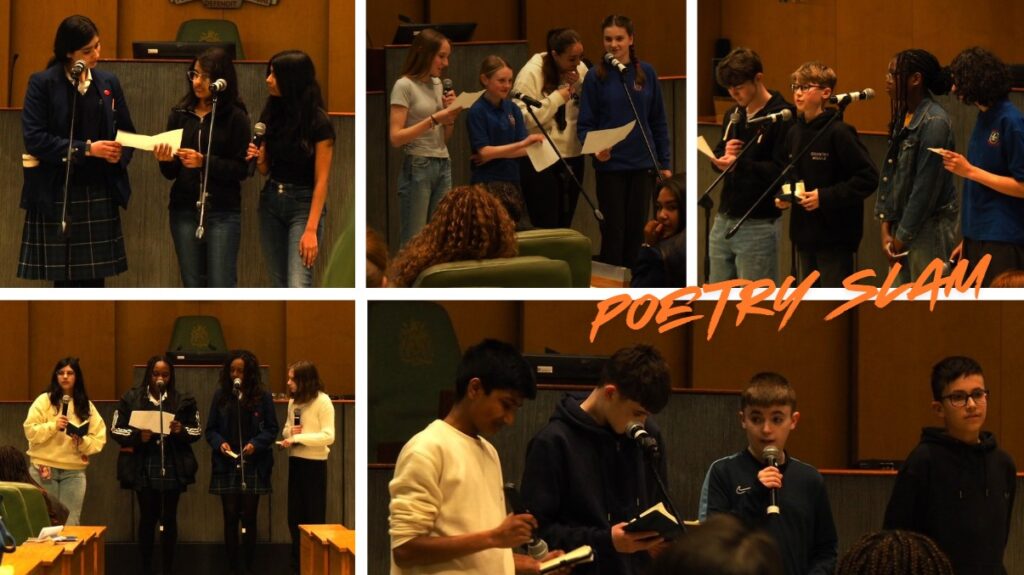
Young people perform in the Multilingual Poetry Slam
At the end of the workshops, all students gathered in the Council Chamber, where each group performed their poems in front of the other pupils, teachers and judges. Many students stepped out of their comfort zones to perform expressive poems in front of a large audience, demonstrating confidence, creativity and teamwork. The performance session allowed students to showcase what they had learned during the workshops and gave them the opportunity to perform in a formal setting. Watching them step out of their comfort zones, work as a team and perform in front of a crowd was honestly the highlight of the event. So much talent, creativity and teamwork in one room.
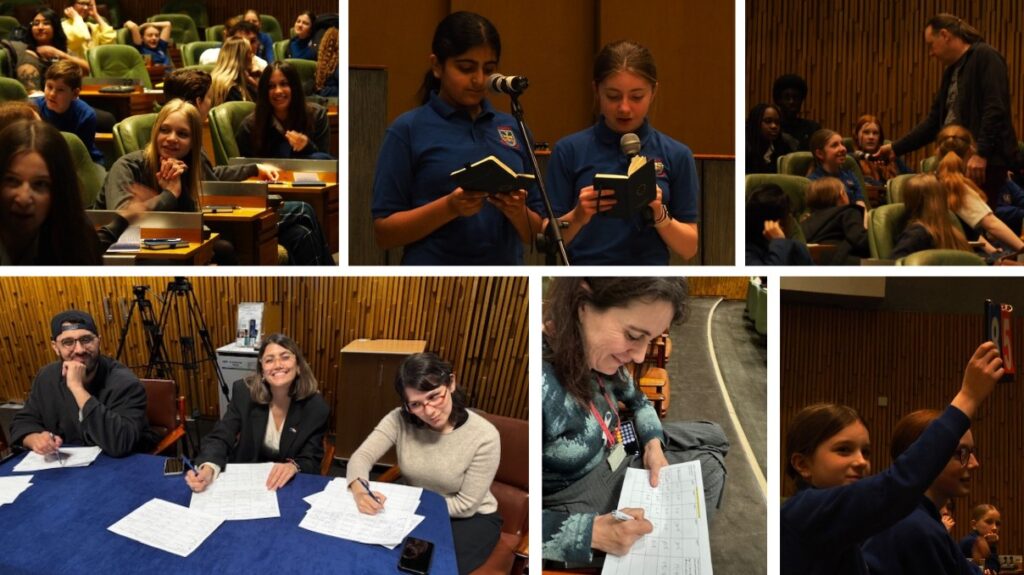
The judging panel consisted of Jasmin Cuppone, a representative from the European Union, poets Elida and Zohab and five students who were randomly selected to participate in the judging process. This inclusive judging panel ensured that both adults and students were involved in evaluating the performances.
Awards were presented in several categories, including Best Performance, Best Imagery, Best Combination of Languages, Best Expression of Feelings and Best Teamwork. These categories recognised different aspects of poetry performance and encouraged students to focus not only on writing but also on delivery, creativity, and collaboration. Congratulations to all the winners!
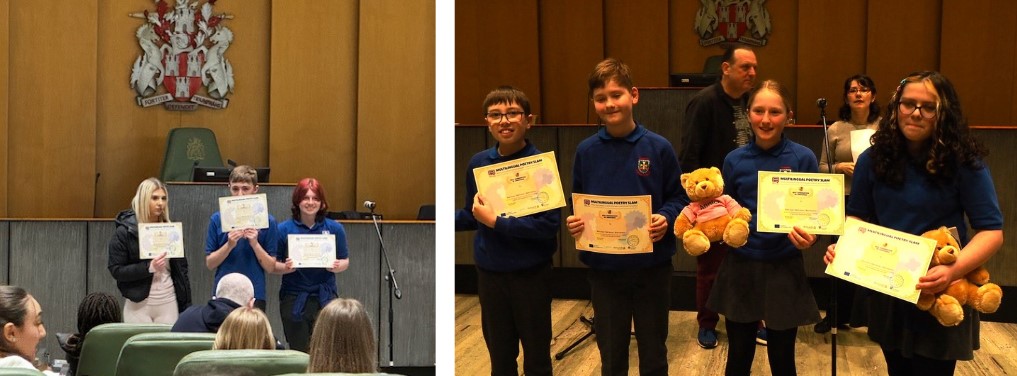
The poetry slam was funded by the European Union, supporting innovative approaches to language learning and cultural exchange.
We are delighted to be supporting the North East Festival of Languages for the first time. Learning languages isn’t just about words; it’s about connecting with people, understanding their stories, and broadening horizons. Multilingualism is at the heart of the European project, and we hope our support of the festival encourages curiosity about the EU.
Jasmin Cuppone, Press and Public Diplomacy, European External Action Service, Delegation of the European Union to the United Kingdom
The Multilingual Poetry Slam captures exactly what language learning should be -creative, collaborative, and full of discovery. It’s inspiring to see young people from across the North East bring their languages, cultures, and imaginations to life on stage. This event shows the power of language to build confidence, spark connection, and open doors to the world, and we’re incredibly proud to support it.
Cath McEvoy-Carr, Director of Children and Families, Newcastle City Council
What a fantastic event. We are grateful to all the poets who enthused young people with their creativity, to the young people who performed so well on the day, to the EU for funding this event as part of the Festival and to Newcastle City Council who hosted it. This has been a wonderful experience, showing how young people can express themselves through poetry in many different languages – they were astonishing!
Declan Baharini, Festival Co-ordinator and Chief Executive Officer, International Newcastle
Poetry is more than just words — it’s expression, confidence, teamwork, and creativity.
The Multilingual Poetry Slam brought students together to explore different languages and create poems that combined culture, storytelling, and performance. From workshops to performances, the energy in the room was incredible and the students absolutely smashed it.
Further information
The Multilingual Poetry Slam activity was developed by Michaël Vidon. It was funded and supported by the European Union. The event was hosted by Newcastle City Council and supported by staff and students from Durham University. It was offered free to schools as part of Express Yourself: North East Festival of Languages.
The event was supported by:

Prizes were provided by:
The Festival is hosted and coordinated by International Newcastle in partnership with Newcastle City Council and is part-funded by the North East Combined Authority. Delivered with over 50 regional, national, and international partners the Festival provides activities, resources, and expertise for free to schools, helping pupils build confidence, communication skills, curiosity, and intercultural understanding.
The Festival is part-funded by the North East Combined Authority

About the author
Denise Kua Sze Min is one of five Festival interns from Northumbria and Newcastle Universities producing articles and digital content for the Festival this year. The Festival wants to provide opportunities for students to gain real-world experience to help them in their future careers.
Denise is originally from Malaysia and is currently studying for a MSc in Forensic Science at Northumbria University. She has a passion for photography and digital content creation.