


Written by Katarina Trajković with photos from Amarnath S – Festival Interns (Digital Content Creators)
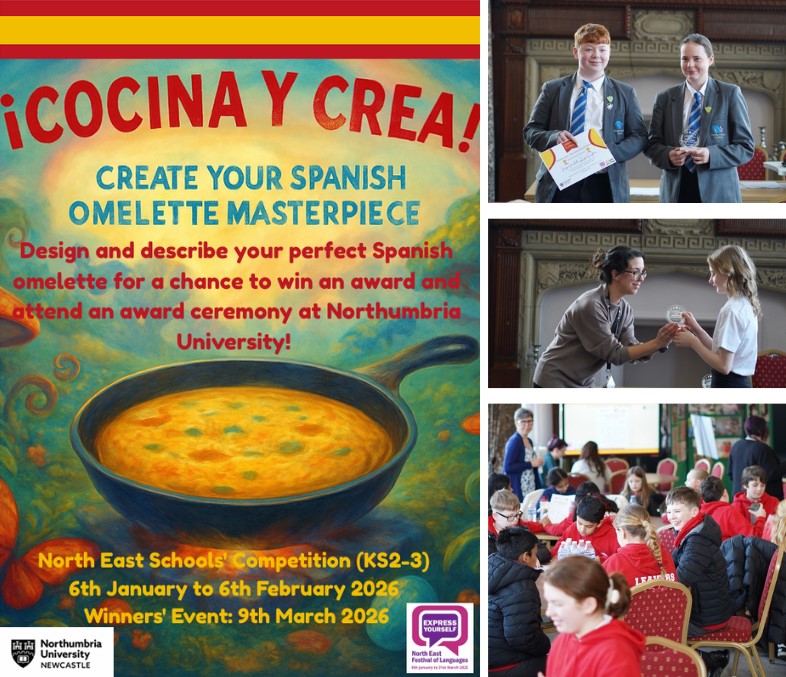
This year, our Express Yourself: North East Festival of Languages introduced a new creative challenge: the Spanish Omelette Recipe Challenge for 7-14 year olds. Designed by Mirella Cariñanos Ruiz, Lecturer in Spanish and Hispanic Studies at Northumbria University in Newcastle, with a resource pack for teachers and pupils, the competition invited primary and secondary schools from across the North East to submit their most creative and daring ideas.
The rules were simple: design a dream Spanish omelette recipe, explain the choices behind the creation, and present the idea in Spanish. However, speaking to the organisers and judges of the competition, selecting the winners was far from straightforward. Florence Potot, Assistant Professor and Unilang Coordinator at Northumbria Language Centre, highlighted that there were more than 2,000 entries submitted!
Celebrating creative interpretations of this iconic dish, the award ceremony took place on 9th March – an aptly chosen date for the competition, as it marks International Spanish Omelette Day. With so many imaginative entries from across the region, the judges faced a difficult decision before finally selecting the winning designs. Now that the competition has come to a close, two creations ultimately took home the trophies:
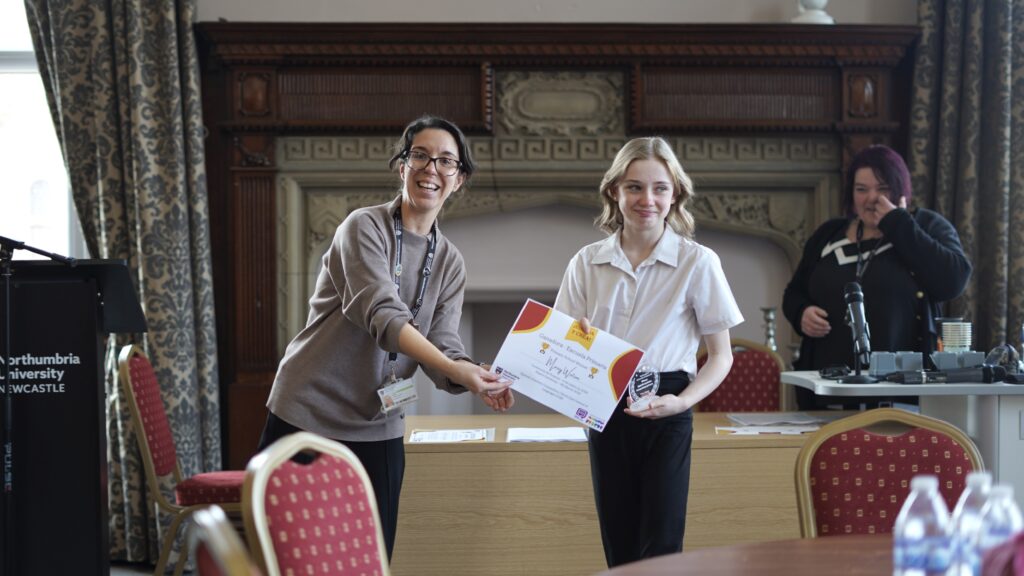
Maisy Watson from Reid Street Primary School in Darlington, with her design titled Tortilla Arcoiris. Her colourful recipe includes ingredients such as carrot, green, yellow and red bell peppers, mushrooms, and tomato. Maisy explained the inspiration behind her creation as wanting to “taste the rainbow of vegetables”.
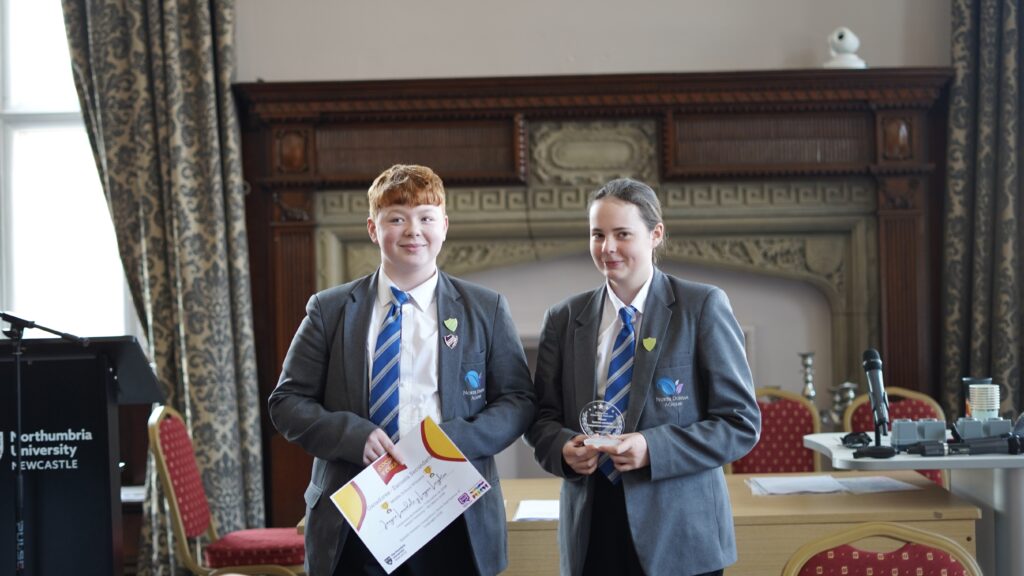
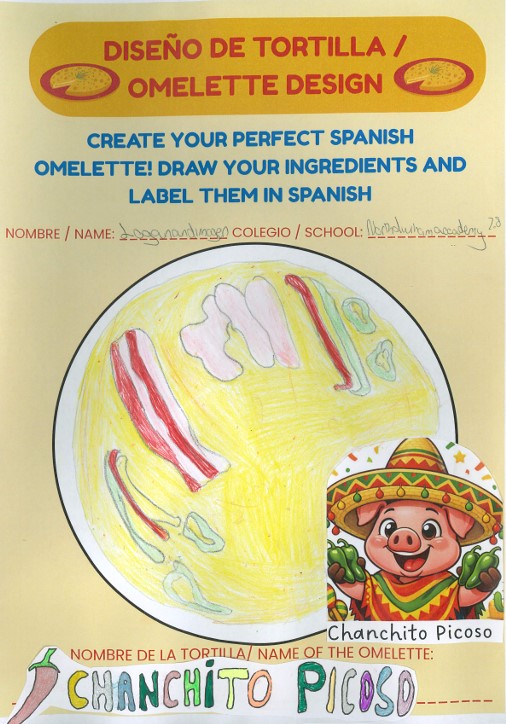
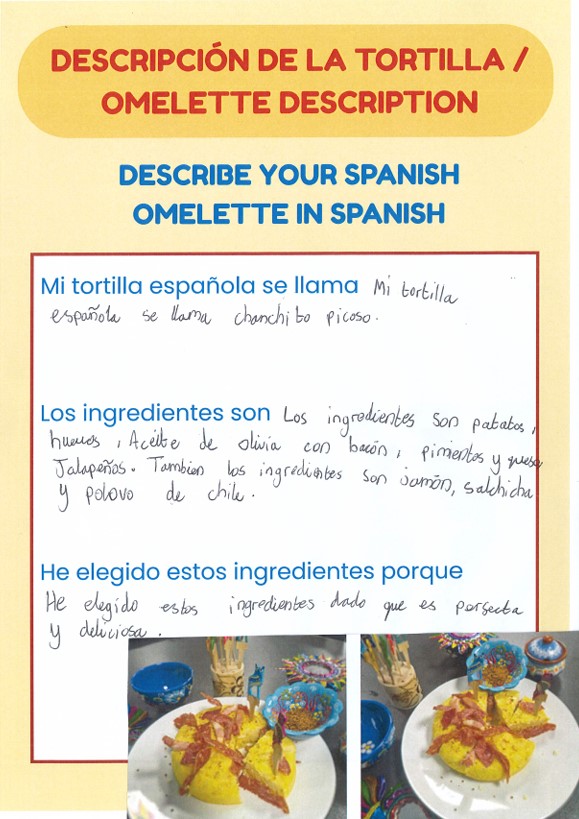
Imogen Lonsdale and Logan Leighton from North Durham Academy in Stanley, with their joint creation, Chanchito Picoso. Their recipe combines potatoes, eggs and olive oil with bacon, peppers, cheese, jalapeños, ham, sausage, and chilli powder, describing the combination as “perfect and delicious”.
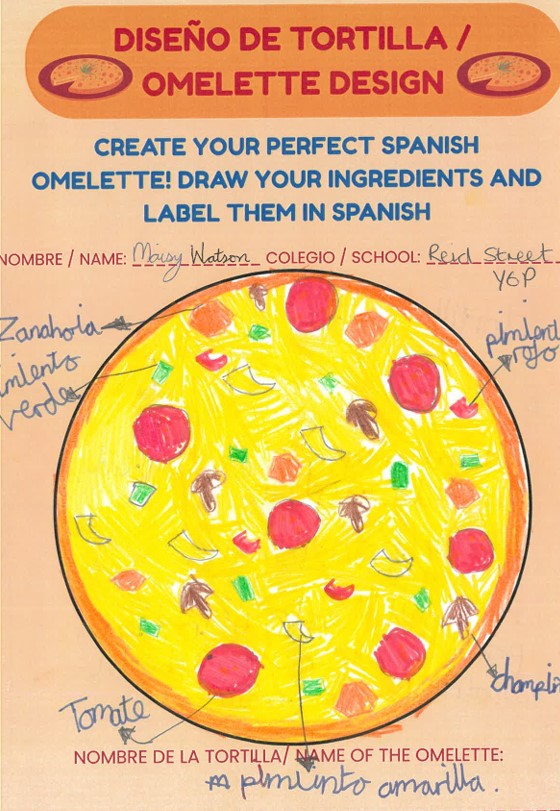
The winning designs showed flair and creativity.
The Key Stage 2 and Key Stage 3 winning designs and descriptions – left, Reid Street Primary and right, North Durham Academy.
From inspiration to celebration
Alongside celebrating the winners, the ceremony also offered a chance to hear from the students, teachers and organisers who helped bring the event to life. Maisy, the primary school winner, said she felt “very happy” when she found out she had won. The inspiration behind her colourful Tortilla Arcoiris came from experimenting with different food ideas and imagining new combinations of vegetables. Although this was her first time taking part in the festival, Maisy described the experience in one word: “exciting.”
Secondary school winners Imogen and Logan said they felt “honoured” when they heard the news. The pair worked closely together on their recipe, Chanchito Picoso. Their idea came after a teacher explained how a traditional Spanish omelette is made, inspiring them to create their own version. Both enjoy similar foods, particularly meat-based dishes, and wanted to incorporate those flavours into their recipe. Asked to sum up the day in a single word, they chose the Spanish word interesante.
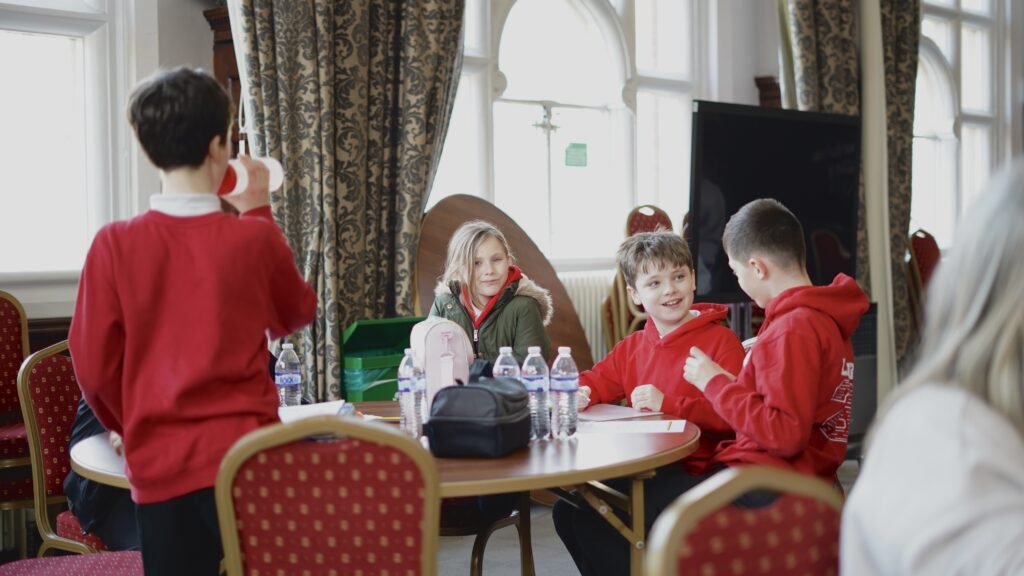

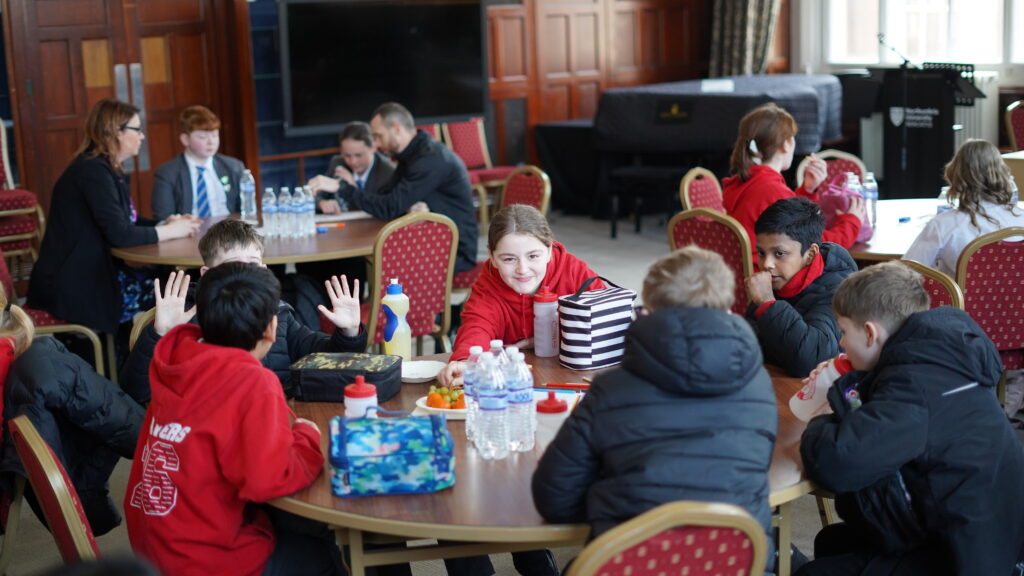
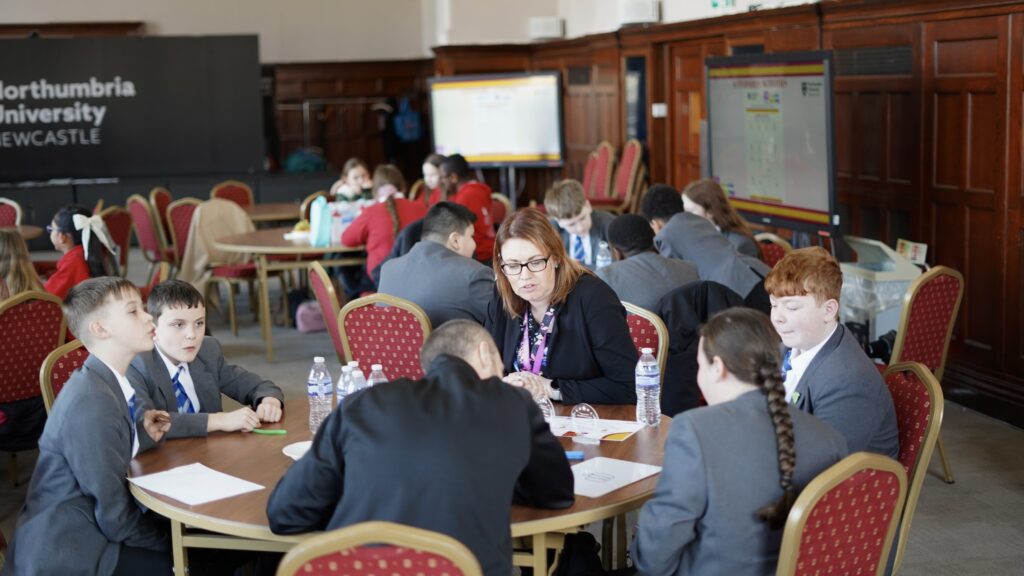
Teachers attending the ceremony also offered further insight into the impact of the competition. Amy Bough, Cognition and Learning Lead Teacher and Design Technology Curriculum Lead at Reid Street Primary School, explained that her school has been involved in the Festival for several years and that interest has grown each year, with pupils showing great enthusiasm for the competition. For many students, she said, the challenge was appealing because it combined creativity, language learning and food.
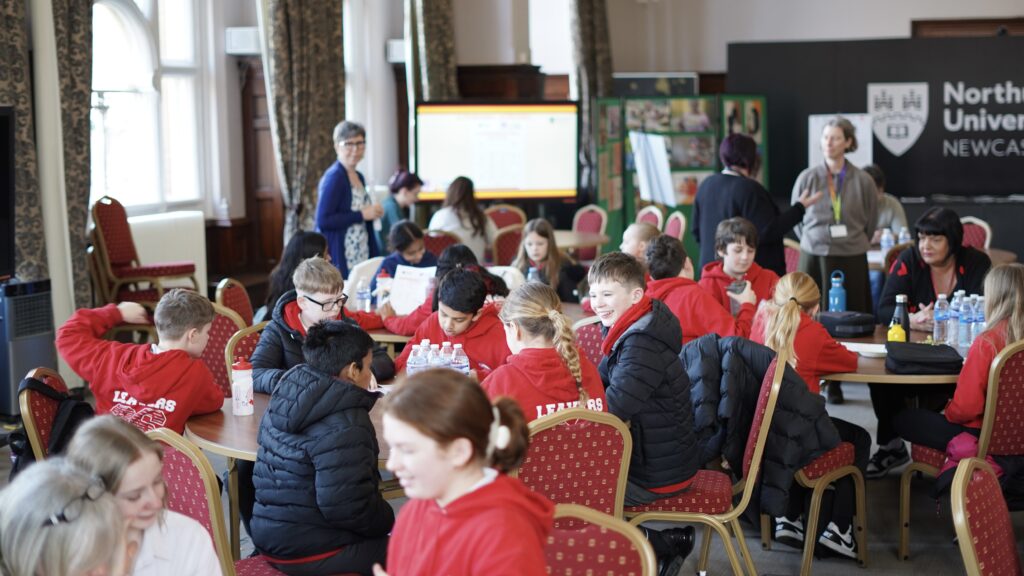

Amy believes initiatives like this are particularly valuable because they offer different ways of engaging children with languages. At Reid Street Primary School, more than 100 different languages are spoken within the school community, reflecting the diverse backgrounds of its families. Although the school formally teaches Spanish and French, activities such as the Spanish Omelette Challenge allow pupils to explore languages and cultures more broadly while also encouraging them to share their own cultural experiences.
For the organisers, competitions like this form part of a wider effort to promote language learning. Florence Potot, said the challenge was designed to engage schools across the region and spark interest in languages. She was particularly pleased by the huge response. As a university that aims to bridge education and the labour market, she noted that language skills have long been identified as a shortage. She emphasised that encouraging language learning from a young age is increasingly important, particularly in the UK, where the promotion of foreign languages has historically been limited. When asked to summarise the event in one word, she said she hoped it would prove “inspiring”.
Mirella Cariñanos Ruiz shared similar views. She explained that the event was organised to involve local schools and share the team’s passion for languages. Activities such as the omelette challenge, she said, allow students to explore not only a language but also the culture behind it. At a time when many languages are gradually disappearing, she believes it is increasingly important to encourage young people to engage with different cultures, perspectives and communities.
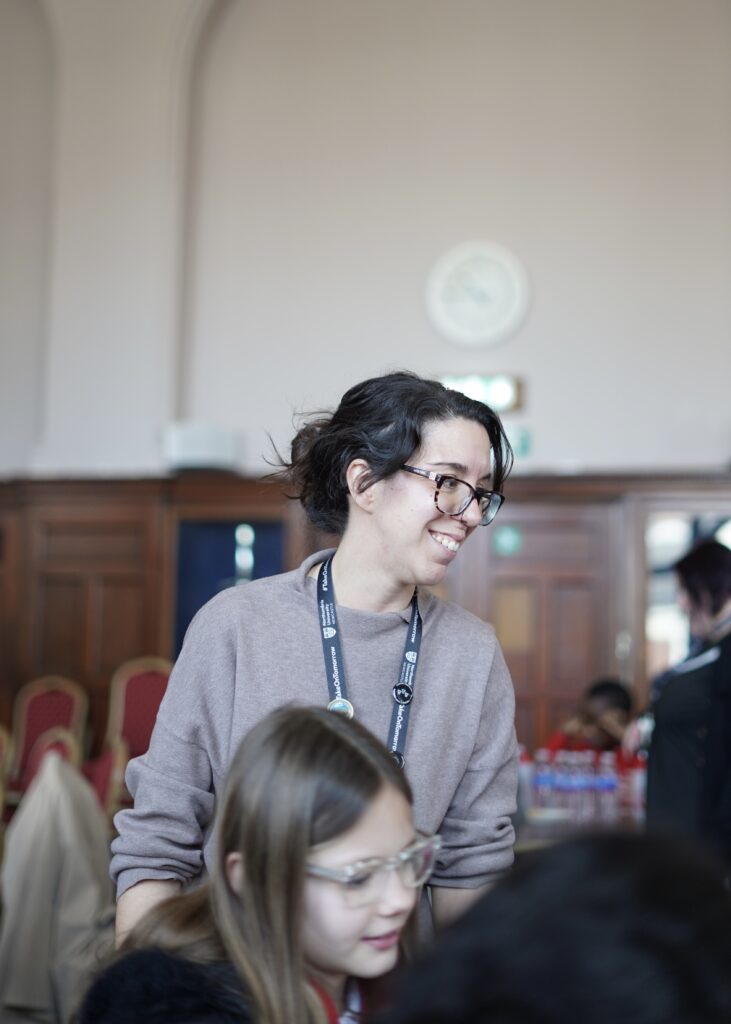
Mirella Cariñanos Ruiz

Florence Potot
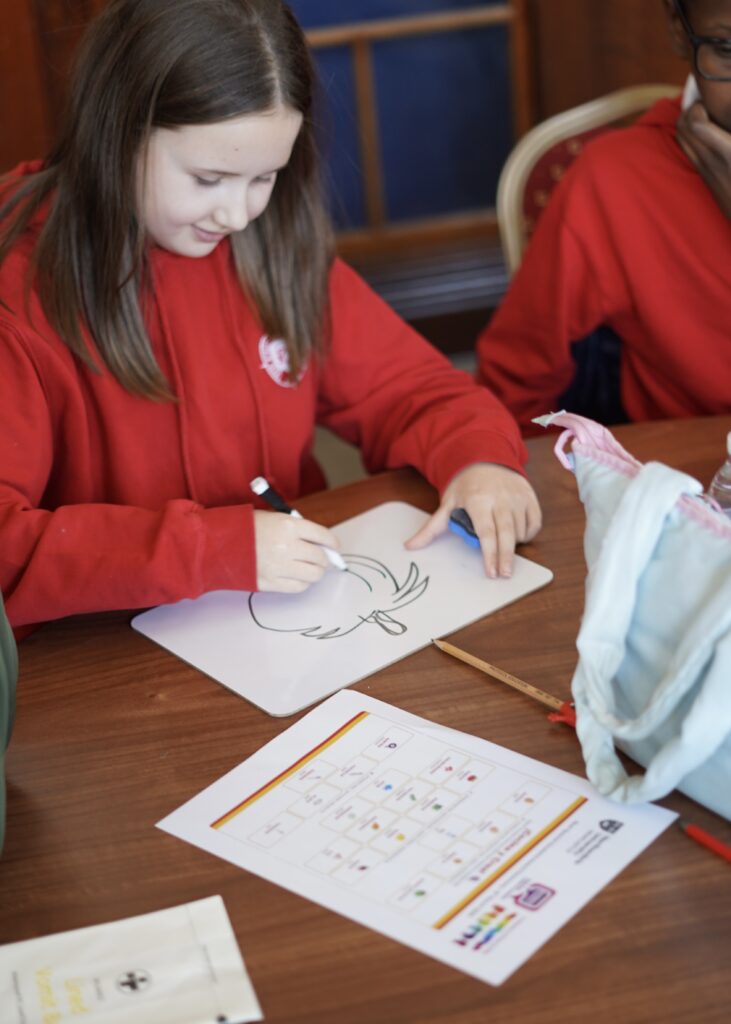
Reid Street Primary pupil

North Durham Academy pupil
Proyecto RECLAMA
The event ended with a talk from Professor Katy Jenkins from the Northumbria University Centre for Global Development, who introduced the crowd to a research project she has been involved in for several years: RECLAMA and which also features in events and resources provided as part of the Festival.
The RECLAMA project – Harnessing Afro-Ecuadorian Women’s Heritage – is a transnational, decolonial and feminist research initiative that aims to document and celebrate the heritage of Afro-descendant and Black women living in Esmeraldas Province on the north coast of Ecuador. The project also seeks to promote more sustainable and equitable development by highlighting the cultural knowledge and experiences of these communities.
Katy explained that the project brings together activists and academics, including members of the Black feminist community arts organisation Colectivo Mujeres de Asfalto in Esmeraldas, alongside researchers from Northumbria University and the Universidad San Francisco de Quito in Ecuador. Since 2019, the team has been working closely with local communities in Esmeraldas, a region with a large Afro-descendant population that also faces significant challenges, including poverty, inequality and racial discrimination. A key part of the project has focused on exploring food as an important element of culture, heritage and identity.
As part of this work, the team has developed age-appropriate educational resources inspired by these traditions, which they hope will help introduce school students to new cultures and perspectives through food, language and storytelling. More information about the project and all related resources can be found on the RECLAMA project website.
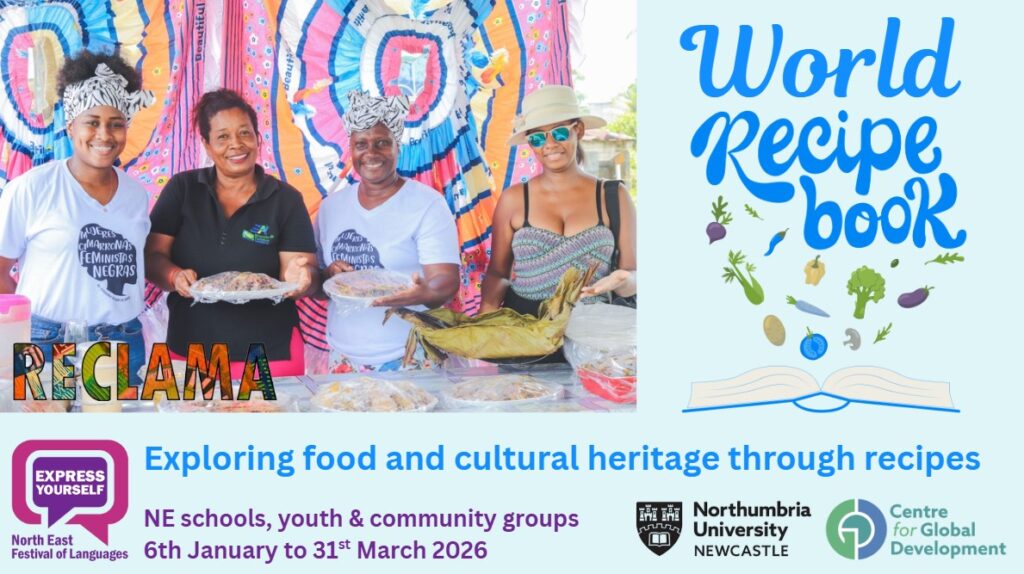
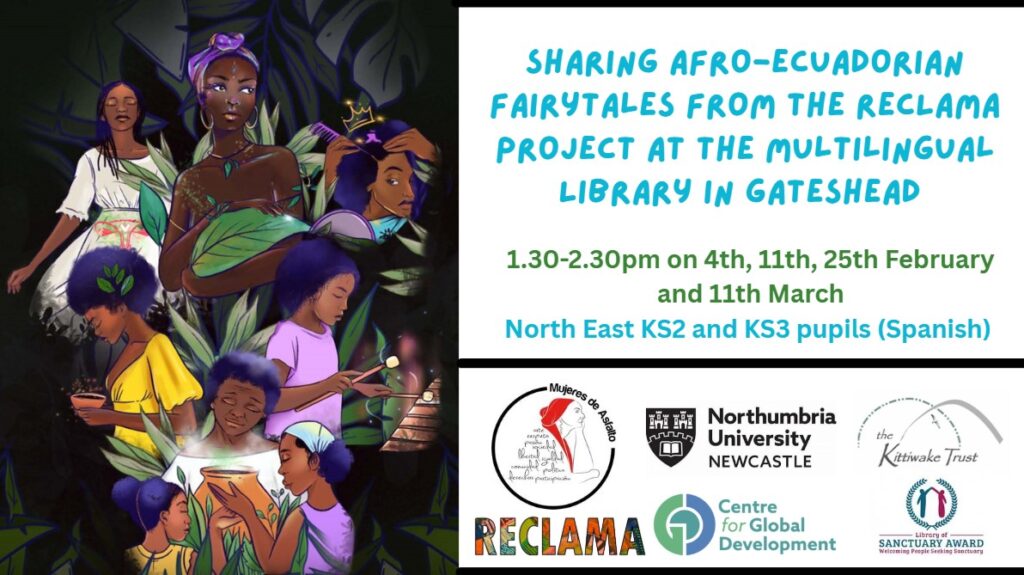
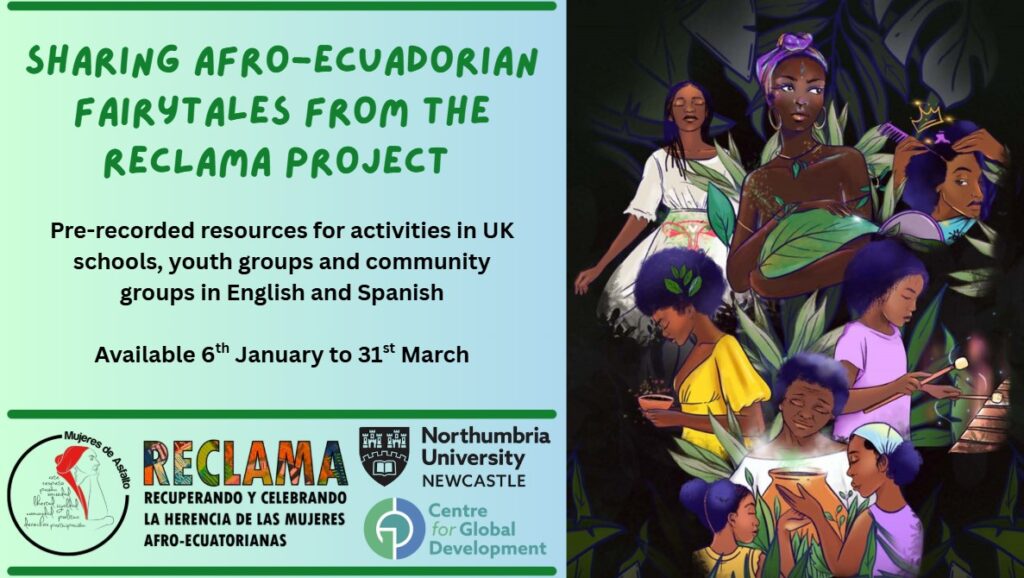
There are three activities related to this project in the Festival:
- World Recipe Book: exploring food and cultural heritage 6th Jan to 31st March NE schools, youth and community groups: Share recipes in languages (other than English) and why these are important to different cultures. Digital recipe book will include selected entries.
- Afro-Ecuadorian Fairytales at the Multilingual Library 1.30-2.30pm on 4th, 11th, 25th Feb, 11th March – For NE KS2-3 pupils: Engaging events (English/Spanish) bringing fairytales to life and learning about the importance of traditions and knowledge in different cultures. With teaching resources.
- Afro-Ecuadorian Fairytales resources (English/Spanish) Available 6 Jan-31 March For UK schools, youth and community groups: Resources in English and Spanish bringing Afro-Ecuadorian fairytales to life, learning about the importance of traditions and knowledge in different cultures.

About the author and photographer
Katarina Trajković and Amarnath S are in our team of five Festival interns from Northumbria and Newcastle Universities producing articles and digital content for the Festival this year. The Festival wants to provide opportunities for students to gain real-world experience to help them in their future careers.
- Katarina is a freelance writer and editor with experience in working for a range of different publications, with a focus on art, culture and heritage. She is currently undertaking a Masters degree in Conservation of Fine Art at Northumbria University. You can see Katarina’s online portfolio here
- Amarnath S. is doing an MSc in Business Analytics with Advanced Practice at Northumbria University. He is passionate about creating digital content and has experience in social media management, content creation, photography, videography, and video editing, with extensive hands-on work covering multiple festivals and live events in Newcastle and Sunderland. You can see Amarnath’s portfolio online here
